By Hi-Tech Environmental & Renovation | Lead Paint Safety NYC | Updated 2025
Summary
Cleaning lead dust safely means using a HEPA-filter vacuum on all surfaces, wiping down hard
surfaces with damp disposable cloths and an all-purpose cleaner, and never dry-sweeping or using a standard vacuum that can send lead particles back into the air. In New York City, where lead paint hazards NYC residents face are among the most persistent risks in older housing, this process must follow EPA Renovation, Repair, and Painting (RRP) Rule guidelines, and any significant disturbance of lead-based paint requires a certified lead abatement contractor. The goal is not just to remove visible dust but to bring surfaces to clearance levels verified by post-cleanup testing, the only way to confirm that your home is truly safe for children and pregnant women.
If you have discovered lead dust in your home, the most important thing you can do right now is stop whatever is disturbing the paint and clear the area of children and pregnant women immediately. Lead dust is invisible to the naked eye, odorless, and deeply hazardous, especially for young children whose developing brains absorb lead at a rate five times higher than adults.
For NYC homeowners living in pre-1980 buildings, lead paint in older homes is not a hypothetical concern. It is a structural reality that demands a methodical, science-backed response. This guide walks you through exactly what to do, step by step, and when to call a licensed professional for residential lead paint removal.
SECTION 1
The Right Way to Clean Lead Dust: Step-by-Step Safety Protocol
The safest way to clean lead dust is with a HEPA-filter vacuum followed by wet wiping with disposable cloths, never with a broom or a standard vacuum. This three-pass system is what certified lead professionals use on every job, and it is the same approach the EPA recommends for homeowners
dealing with disturbed lead-based paint in residential settings.
Before You Begin: Essential Supplies
- HEPA vacuum cleaner: Standard vacuums recirculate fine lead particles back into the air. Only a true HEPA filter traps particles down to 0.3 microns.
- Disposable mop heads and wet cloths: Use single-use materials so you are not spreading contamination from room to room.
- All-purpose household cleaner: Mixed with water, this breaks the bond between lead particles and surfaces.
- Heavy-duty plastic bags: All contaminated materials must be sealed and disposed of as lead waste.
- Nitrile gloves and N100 respirator mask: Protect your skin and airways even during cleaning, not just during disturbance.
- Plastic sheeting: Seal off the work area from adjacent rooms to prevent cross-contamination.
Step-by-Step Cleaning Process
- Remove children and pregnant women from the area and keep them out until clearance testing confirms the space is safe.
- Seal off the contaminated room with plastic sheeting taped over doorways and HVAC vents.
- Pick up visible paint chips with damp paper towels. Do not use bare hands. Seal all debris in plastic bags immediately.
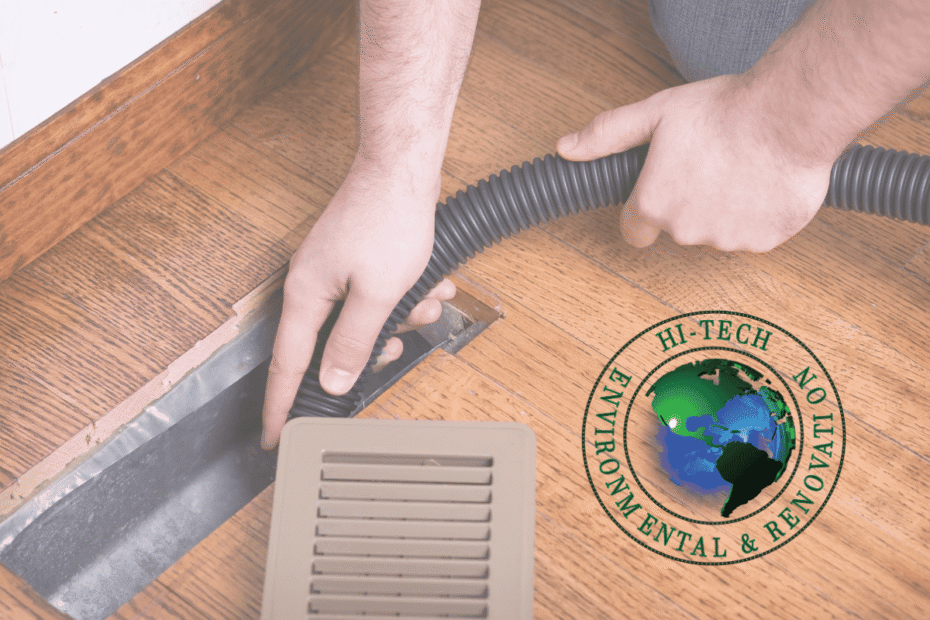
- Vacuum all horizontal surfaces, including floors, window sills, and shelves, with a HEPA vacuum. Move slowly, overlapping passes from the farthest corner toward the door.
- On uncarpeted floors, follow vacuuming with a damp mop using disposable mop heads. Change pads frequently. Do not use a traditional mop-and-bucket system, as this spreads contamination.
- Wipe all hard surfaces at least three times with damp disposable cloths soaked in all-purpose cleaner. The EPA calls this the ‘three-cloth method.’
- Bag all used cloths, mop pads, and protective gear immediately in heavy-duty plastic bags and seal them.
- Remove your clothes at the door, wash them separately, and shower before re-entering living areas.
After cleanup, the only way to confirm the space is genuinely safe is post-cleanup dust wipe testing conducted by a certified lead dust sampling technician. Clearance testing is not optional when children under six or pregnant women live in the home. NYC lead paint law and federal RRP rules both require it following a certified abatement or renovation project.
SECTION 2
The Hidden Danger in Pre-1980 Homes: What Every NYC Homeowner Must Know About Lead Paint
Approximately 63 percent of New York City’s housing stock was built before 1960, which means lead paint hazards NYC residents face are not a relic of the past but an active daily concern. Lead-based paint was the industry standard for interior and exterior surfaces until it was federally banned for residential use in 1978. Buildings from this era almost certainly contain it, and renovation, friction from windows and doors, or simple deterioration can release lead dust at any time.
What NYC Homeowners Ask Most
Q: Is lead paint dangerous if it is not peeling?
A: Paint that is intact and in good condition poses a lower immediate risk, but it becomes hazardous the moment it is disturbed by sanding, cutting, or friction. It still requires monitoring, especially on high-wear surfaces like windows and doors.
Q: How do I know if my apartment has lead paint?
A: If your building was constructed before 1978, the law assumes lead is present until a certified lead-based paint inspector with an XRF analyzer or lab-tested samples proves otherwise. Professional lead paint testing NYC services can provide a formal assessment and the documentation you need.
Q: What is NYC’s lead paint law for landlords?
A: Under Local Law 1 of 2004, NYC landlords in pre-1960 buildings must perform annual visual inspections and remediate any identified lead hazards when a child under six lives in the unit. Violations can result in HPD Class C violations requiring correction within 24 hours.
Where Lead Dust Hides in Pre-1980 NYC Homes
- Window wells and sills: friction from opening and closing windows grinds lead paint into fine dust that settles on nearby horizontal surfaces.
- Door frames and jambs: the same friction effect makes doorways a significant ongoing source of lead dust in older apartments.
- Radiators and baseboards: heat causes old paint layers to expand and contract, accelerating deterioration season after season.
- Stairwells and handrails: high-traffic wear areas in pre-war buildings where layers of lead paint have built up over decades.
- Exterior soil around the building: flaking exterior lead paint accumulates in soil, which can then be tracked indoors on shoes.
- Renovation disturbing painted surfaces: any sanding, cutting, or demolition of pre-1978 surfaces without proper containment creates a significant lead dust event.
The 2024 EPA rule revision tightened dust-lead clearance standards significantly. Any reportable level of lead in dust, as analyzed by an accredited laboratory, now triggers remediation requirements in pre-1978 homes and childcare facilities. This underscores why professional lead paint testing NYC and post-cleanup clearance testing are no longer optional. They are the regulatory standard.
Lead Dust Cleaning Methods: Safe vs. Unsafe
| Method | Safe? | Why It Matters |
HEPA vacuum | YES | Captures particles to 0.3 microns; does not recirculate dust |
Damp wiping / disposable cloths | YES | Traps dust in moisture; single-use prevents cross-contamination |
| Wet mop with disposable head | YES | Effective for hard floors; change pads frequently |
Dry sweeping / broom | NO | Kicks lead dust into the air; dramatically increases inhalation risk |
| Standard (non-HEPA) vacuum | NO | Exhausts fine lead particles back into the breathing zone |
Traditional mop and bucket | NO | Contaminated water spreads lead across unaffected surfaces |
Steam cleaning | NO | Heat can aerosolize particles; not EPA-approved for lead cleanup |
Dry sanding or scraping | NO | Creates a major lead dust event; requires certified abatement setup |
Ready to Make Your Home Lead-Safe?
If you suspect lead dust in your home or have been issued an HPD violation, do not wait. The certified team at Hi-Tech Environmental & Renovation serves all five boroughs of NYC with EPA-compliant lead paint testing, residential lead paint removal, and post-clearance testing. We handle every step so your family can return to a safe, verified environment.
Book your lead abatement inspection today:
hitechnyc.com/contact-us(718) 450-4138 | (347) 462-9698
Frequently Asked Questions
Q1. What is lead dust and where does it come from?
Lead dust is created when lead-based paint deteriorates, is sanded, scraped, or disturbed during renovation work. It is invisible, odorless, and settles on floors, window sills, and furniture where children can ingest it simply by touching surfaces and putting their hands in their mouths.
Q2. Can I clean lead dust myself, or do I need a professional?
Minor, isolated incidents on hard surfaces can be addressed by a careful homeowner using the HEPA vacuum and wet-wipe protocol described in this guide. However, if the source of the dust has not been permanently addressed, or if a child under six is present, you should engage a certified lead abatement contractor. NYC lead paint law and federal rules require certified professionals for any work that disturbs lead-based paint beyond minimal thresholds.
Q3. Is lead paint testing required before renovation in NYC?
Before renovation, repair, or painting work in a pre-1978 NYC building, lead paint testing NYC is strongly recommended and in many cases legally required. A certified inspector using an XRF analyzer or lab-tested paint chip samples will confirm where lead paint is present so your contractor can manage it with proper containment.
Q4. What is NYC’s lead paint law for tenants?
Under NYC Local Law 1, tenants with children under six in pre-1960 buildings are protected by
mandatory annual visual inspections by landlords. If a hazard is found, the landlord must remediate it using safe work practices and certified contractors. Failure to comply can result in an HPD Class C violation with a 24-hour correction deadline.
Q5. How long does lead dust stay in the air?
Very fine lead dust particles can remain airborne for hours after a disturbance, which is why protective containment and air filtration are essential during any work involving lead paint. Heavier particles settle quickly onto horizontal surfaces but remain hazardous there until properly cleaned.
Q6. What happens if lead dust is not cleaned up properly?
Improper cleanup, such as dry sweeping or using a non-HEPA vacuum, simply moves lead dust around rather than removing it. Children are most vulnerable. Elevated blood lead levels are linked to reduced IQ, attention disorders, and developmental delays. The CDC states that there is no safe blood lead level in children, which is why lead poisoning prevention starts with thorough, correct cleanup and elimination of the source.
Q7. What is residential lead paint removal and how is it different from cleaning?
Residential lead paint removal, or lead abatement, permanently eliminates the lead hazard by removing, encapsulating, or enclosing the lead-based paint. Cleaning is an interim control measure to reduce immediate exposure from dust already present. Professional abatement is the only permanent solution and must be performed by an EPA-certified firm with proper containment, waste disposal, and clearance testing.
Hi-Tech Environmental & Renovation | 480 Kings Highway, Brooklyn, NY 11223 | (718) 450-4138 | (347) 462-9698 | info@hitechnyc.com |
hitechnyc.com
Licensed and insured. Serving all five boroughs of NYC and New York State. EPA-certified lead abatement professionals.

Brooke Hastings is a devoted content writer who creates informative articles focused on asbestos, lead paint, and mold remediation. She enjoys breaking down complex environmental and safety topics into practical guidance that helps homeowners, property managers, and contractors make informed decisions. With a focus on accuracy, clarity, and reader value, Brooke develops content that educates, builds trust, and supports safer properties.